The Plastics Recycling Show Europe (PRSE) will once again be a central industry meeting place and bring experts from across Europe together in Amsterdam on 5 and 6 May 2026. Lindner will be showcasing powerful plant, shredder and service solutions in plastics recycling at Stand D16. The focus: Recyclate quality, energy efficiency and process optimisation along the entire value-added chain.
As part of the European recycling trade show, Lindner will present integrated engineered solutions and innovative technologies for plastics processing. In line with the slogan “Ready for the future of your business”, the company positions itself as a reliable partner for the sector. The technology partnership between Lindner Washtech and EREMA shows how integrated process solutions can set new benchmarks throughout the supply chain. At its exhibition stand, the company’s highlights include innovations in mechanical recycling that produce recyclate purity levels for use in the food, cosmetics and personal care sectors.
Reliable performance along the entire supply chain
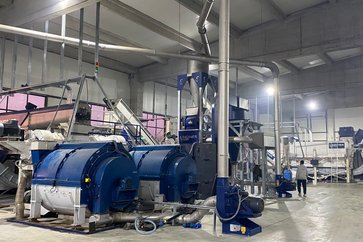
With almost 80 years of experience in waste management and recycling, Lindner is an established solutions provider in the recycling industry. Its portfolio ranges from powerful stand-alone machines to integrated systems, which are complemented by extensive service and lifecycle deliverables. In plastics recycling, Lindner has been covering all the essential process steps of shredding, sorting and washing for decades. Its international project and process expertise is evidenced by more than 250 washing plants and components that have been installed worldwide.
Thanks to the technology partnership between Lindner Washtech and EREMA, the recycling process is now represented in its entirety. Lindner Washtech’s experience in mechanical processing and EREMA’s expertise in extrusion fit together perfectly to provide a continuous system. The result is an integrated comprehensive solution – from the feedstock to the final recyclate.
A benefits package was developed in their joint “Added Values” project with the aim of optimising material flow, energy efficiency, plant availability and process stability. Standardised interfaces, consistent system networking (key data swap) and joint first-level support increase transparency and operational and investment security. In addition to perfectly coordinated machine engineering, customers also gain added value from coordinated project management, which has measurable benefits for quality, throughput and cost effectiveness.
Bottle-to-Bottle loop with food-grade quality
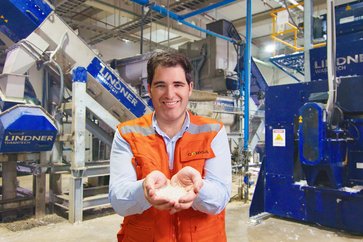
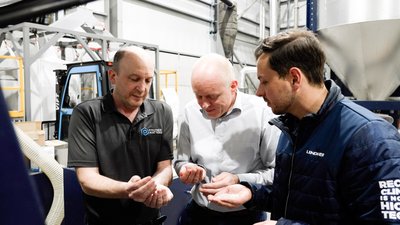
Lindner is also showcasing technology used to recycle post-consumer plastics. Producing food-grade recyclate is considered to be one of the most challenging tasks in plastics recycling. Food-grade recyclates are recycled plastics that are verified as being suitable for food contact and meet the highest requirements in purity and safety. In its collaboration with the Northern Irish recycling company Polymer Matters, Lindner shows how food-grade rHDPE granulate can be successfully manufactured from used milk bottles on an industrial scale using state-of-the-art washing and extrusion technology. At the heart of this technology is a precisely coordinated process from sorting to cold and hot washing to the subsequent extrusion and thermal decontamination. The first EFSA phase has been achieved in the European approval process, which means the recyclate can already be used to manufacture milk bottles. This flagship project shows that a fully integrated and energy-efficient mechanical recycling process and high-quality recyclate can pave the way for demanding applications such as food-grade recycling.
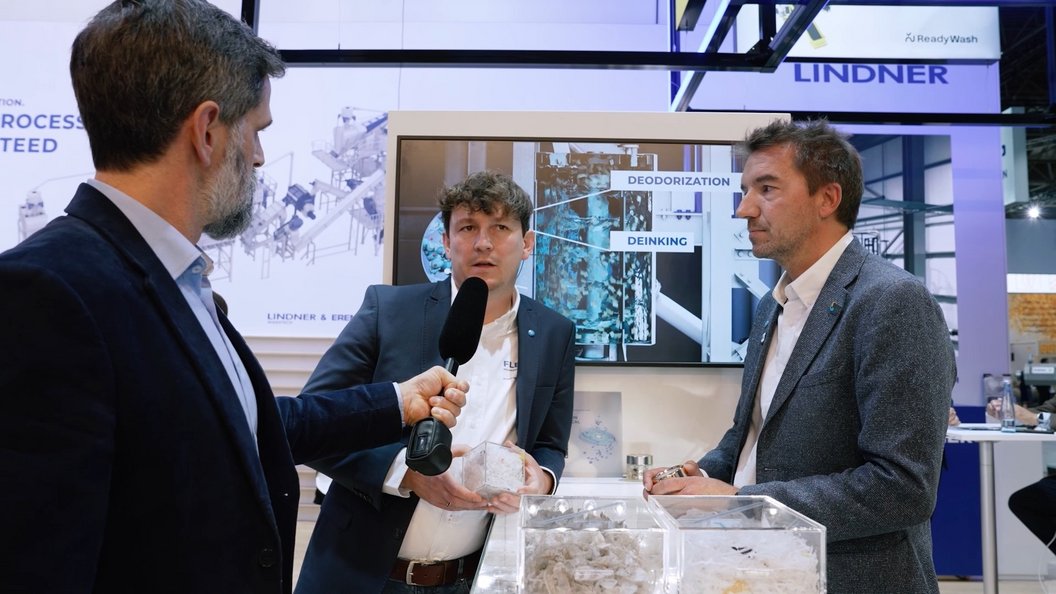
Lindner will also be presenting another revolutionary mechanical recycling technology – Flexloop. A technology developed by P&G, Lindner holds the exclusive worldwide licence for Flexloop and has scaled it for industrial use. This technology uses a solvent-based extraction process to specifically remove impurities such as NIAS (non-intentionally added substances), odours, adhesives and printing inks from the polymer chains, without damaging them. The high purity achieved opens up new application options and gives recyclers new business opportunities – for instance in the cosmetics or personal care sectors.
PRSE as a platform for future-proof solutions
As the established European trade fair for plastics recycling, PRSE brings together innovation, dialogue and networking in one location, creating the ideal setting to discuss responses to the industry’s challenges. This is also where Lindner steps in.
“Volatile raw material markets, the rising oil prices and high energy costs are currently putting pressure on the plastics and recycling sector,” says Matthias Egarter, Lindner CEO. “This makes it all the more important to ensure efficient and stable processes throughout the supply chain. These processes reduce operating expenses while also improving recyclate quality, opening up new business fields for recycling companies, for instance in regulated fields such as food, cosmetics and personal care packaging.”
SAVE THE DATE:
Lindner’s talk
“Enabling Food-Grade Approved Recyclate. The Polymer Matters Success Story.”
Wednesday, 6 May 2026
13.10 to 13.40
Conference Theatre 1
Food-grade recyclates
A key focus for Lindner at PRSE 2026 is the processing and recycling of post-consumer plastics. Milk bottles can be reused and turned into food-grade rHDPE granulate using state-of-the-art washing and extrusion technology as demonstrated by the Northern Irish recycling company Polymer Matters.
Process excellence
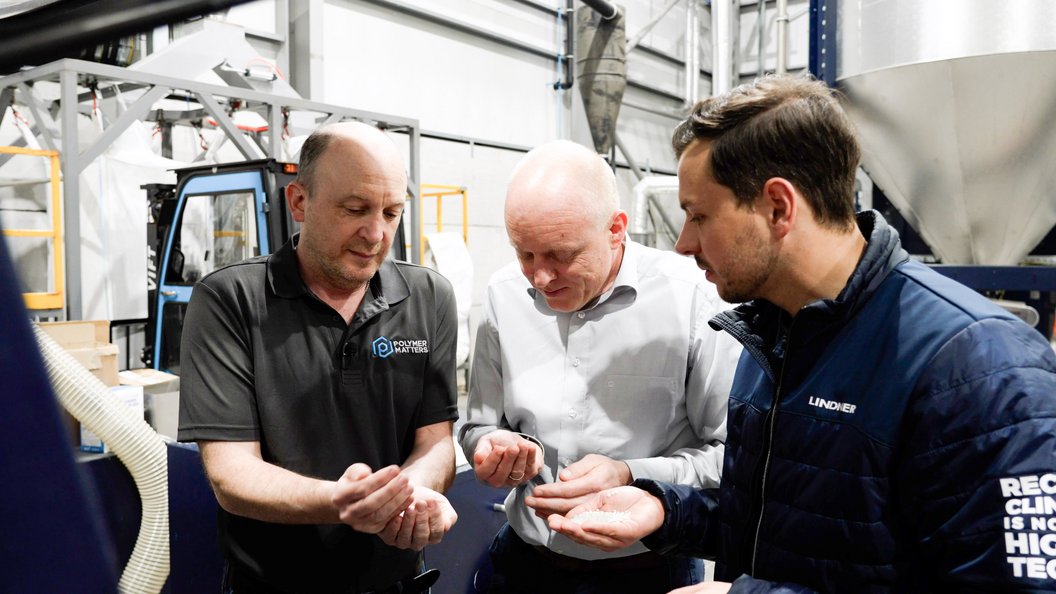
To produce recyclate suitable for food contact requires every single process step to be precisely coordinated. This is where Lindner Washtech and EREMA come into play: Their technology partnership makes it possible to closely coordinate the process: from sorting, shredding and washing to extrusion – a critical condition for industrial-scale food-grade applications.
Flexloop
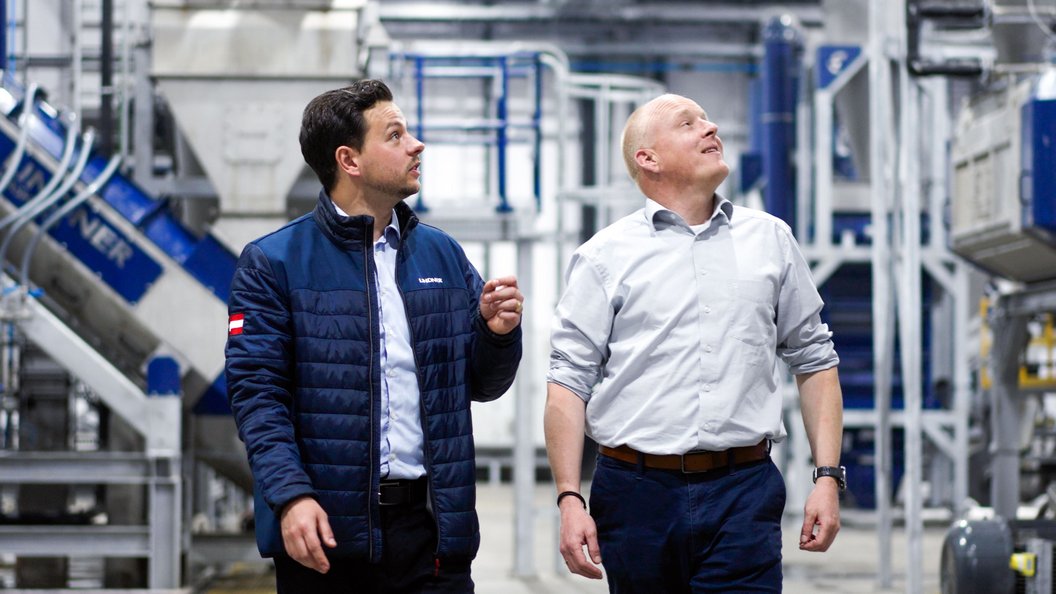
The modular Flexloop system is another fair highlight. A solvent-based extraction process is at the system’s core and reliably removes impurities (NIAS), odours, adhesives and printing inks from the polymer chains. Post-consumer recyclate can even be used in future for sensitive packaging, such as those needed in the cosmetics and personal care sectors.